
What Documents Should I Verify Before Buying an Open Plot? – Buying a plot is one of the most exciting investments you can make and requires utmost care.
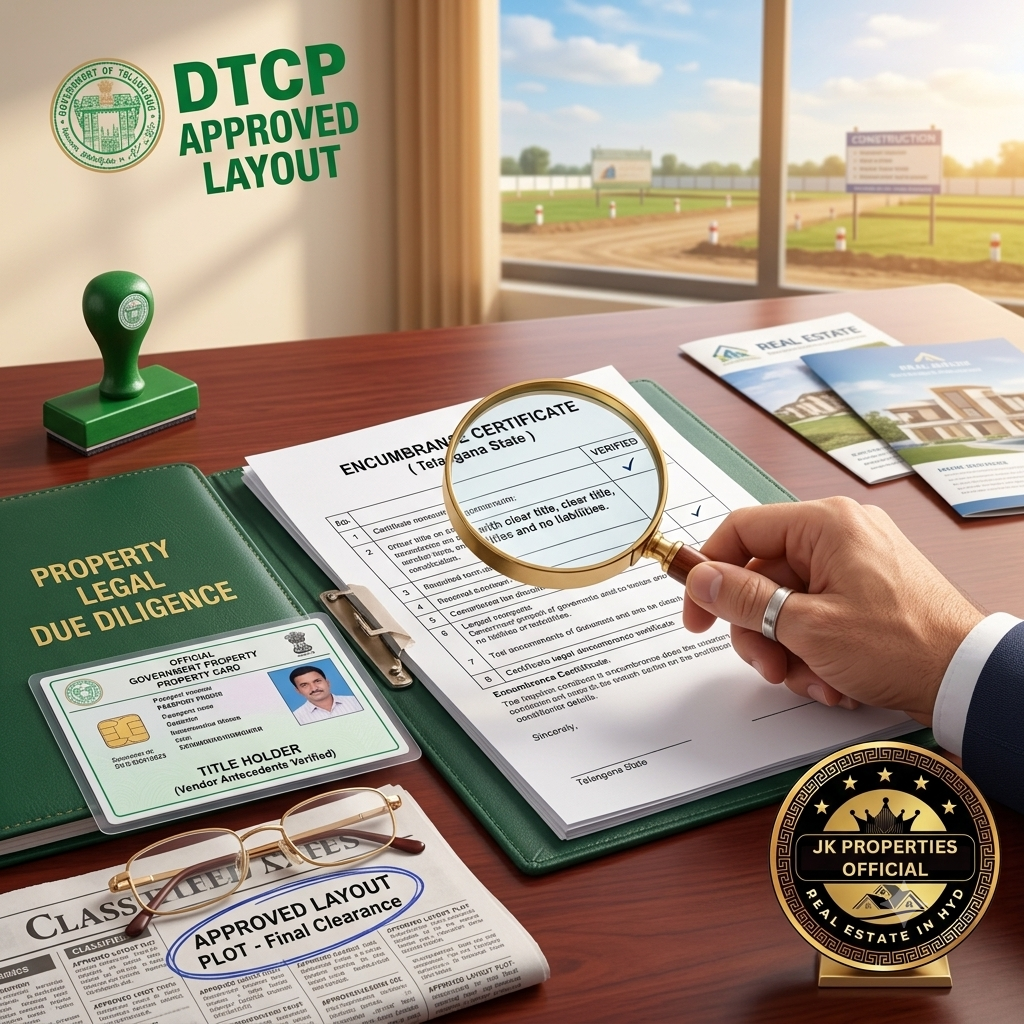
I. Property Purchase – Precautions : Verify Before Buying an Open Plot
According to the Indian Contract Act, a seller can only pass on the exact quality of title that they already possess.Consequently, if the seller’s title is defective, you will inherit a defective title. The simple reasoning is that they can sell only what they have—and nothing more.
To avoid getting entangled in exhausting legal disputes down the line, legal due diligence is absolutely essential. Therefore, treat this comprehensive checklist as your ultimate safety guide before making any real estate transaction.
1.Verify the Character (Antecedents) of the Vendor:
a. First and foremost, you must check the reputation and background of the vendor. If a seller is a habitual offender involved in real estate scams or crimes, you should drop the deal immediately—even if their land titles look perfect.
b. On the other hand, dealing with a respectable person ensures a smooth transaction. Even if a boundary dispute pops up later, you can easily resolve it through a gentleman’s agreement without dealing with verbal abuse or messy lawsuits.
2. Trace the Foundation: Property Title Search Before Buying an Open Plot:
a. To begin with, you should carry out a comprehensive search at the sub-registrar’s office to trace past ownership changes and existing legal claims.
b. The documents you need to verify depend strictly on how the seller originally acquired the land:
| How the Seller Received Rights | Document You Must Request & Verify |
| Direct Purchase | Registered Sale Deed |
| Inheritance / Will | Predecessor’s Title Deeds & Revenue Record Entries |
| Family Division | Registered Deed of Partition |
| Received as a Gift | Registered Gift Deed |
| Settlement | Settlement Deed |
| Government Allocation | Official Grant Order |
| Relinquished Rights | Release Deed |
3.Conduct an Intensive Personal Inspection:
a. Therefore, the entire burden of verification lies on your shoulders. Never buy land blindly. Instead, visit the site personally with two or three trusted people. Talk directly to the neighbors and local elders to quietly inquire about actual physical possession, ongoing border disputes, or hidden family arguments.
b. While this is easy in populated villages, it requires a lot more effort in vacant suburban areas where you must actively track down nearby landowners.
4.Scrutinize Power of Attorney (POA) Sales:
a. If a developer or agent is signing the sale deed on behalf of the actual owner using a Power of Attorney, you must examine that document with extreme caution.
b. Specifically, verify that the POA is properly stamped, registered, and completely active. You must confirm that the original owner has not secretly revoked the agent’s powers before you hand over any money.
5. Demand Originals and Watch for Photostat Frauds :
a. Unfortunately, advanced color xerox technology makes it incredibly easy for clever scammers to trick innocent buyers with high-quality copies. If a seller claims the originals are lost or stolen, ask for a certified copy of the police FIR.
b. Furthermore, you should publish a public notice in local newspapers calling for any hidden claims before closing the deal on a property that lacks original deeds.
6.Verify Photographs and Thumb Impressions :
a. Since the year 2001, Section 32A of the Registration Act mandates that both buyers and sellers must affix their photographs and thumbprints to registered sale deeds.
b. As a result, if your seller bought the land after 2001, you have a foolproof way to verify their true identity. Carefully match their face against the old registered documents to ensure no one is impersonating the real owner.
7. Check Up-to-Date Taxes and Utility Bills:
a. Unpaid property taxes become an immediate financial charge on the land. For this reason, you must visit the local municipal or village office with the land survey number to confirm that all property taxes, water bills, and electricity charges are paid up to date.
b. Check the tax receipt columns carefully to make sure the seller’s name matches the owner’s column perfectly.
8.Secure an Encumbrance Certificate (EC) & Bank Release:
a. Never buy a property without checking the Encumbrance Certificate (EC) from the Sub-Registrar office (or MeeSeva centers in Telangana).
b. The EC tracks whether the plot carries any outstanding legal dues or active mortgages.
c. In addition to this, if the owner previously pledged the land for a bank loan, do not rely on simple payment receipts. Demand an official “Release Certificate” issued directly by the bank to clear the debt completely.
9. Inspect Approved Construction Plans:
a. If you are buying a building or a flat under construction, cross-check the structural work against the officially sanctioned municipal plans.
b. If there are any structural deviations, clarify immediately whether they can be regularized with a minor penalty.
c. Buying a property with unapproved, non-regularized deviations means you are taking a massive risk of facing future demolition by municipal authorities.
10. Confirm Complete Stamp Duty Payments:
a. Unpaid or deficit stamp duty can haunt you years down the line. Many states, including Telangana, create an automatic legal charge over the land if a past document was under-stamped.
b. Consequently, you—as the new owner—will be forced to pay those old deficits and penalties, even though you weren’t part of that original transaction. Inspect the entire historical chain of documents to ensure full stamp duty was paid every single time.
11. Handle Minor-Owned Properties Wisely:
a. If the property belongs to a minor, the natural guardian cannot simply sell it off. Instead, they must obtain prior, explicit approval from a court of law.
b. Buying a minor’s property without this court order makes the transaction completely voidable once the minor turns 18. Alternatively, you must secure a registered ratification deed from them immediately after they attain majority.
Official Source: The guidelines and legal safeguards outlined in this checklist are verified directly against the advisory framework provided by the state government. For a complete look at the regulatory guidelines, you can read the official list of Property Purchase Precautions from the Registration and Stamps Department.